Mental Health Champions
Mental Health Champions
Supporting Children’s Mental Health and Wellbeing
The Mental Health Champions role is designed to develop children’s understanding of mental health and wellbeing across the school, ensuring every child feels heard, supported, and empowered.
Why Mental Health in Schools Matters
Mental health plays a crucial role in a child’s ability to learn, develop relationships, and cope with challenges. Research shows that:
• 1 in 6 children aged 5-16 experience mental health challenges.
• Schools that prioritise mental wellbeing see improved academic performance and better emotional resilience in their children.
• Teaching mental health awareness from an early age helps children develop coping strategies that last a lifetime.
By promoting positive mental health at school, we give children the tools to manage stress, express their feelings, and support one another.
Our Mental Health Champions
Each class from Year 2 to Year 6 has two Mental Health Champions, specially trained to support their peers. Through their training, they have learned:
✅ How to look after their own mental health – understanding that self-care is essential in supporting others.
✅ Confidence-building strategies – helping them communicate effectively and support friends who may be struggling.
✅ How to be compassionate and generous – using kindness and empathy to uplift those around them.
✅ Recognising when a friend might need adult support – ensuring concerns are shared with school staff.
‘On Cloud Nine’ – A Space to Relax and Recharge
Our Mental Health Champions have helped shape an exciting project: ‘On Cloud Nine’, a dedicated space for children to relax and unwind. Located outside near to nature school, this area is designed to be a calm, peaceful retreat where children can take a break from the wider playground.
The Mental Health Champions have contributed ideas for this space, including:
Gardening – connecting with nature for mindfulness and relaxation.
Arts & Crafts – using creativity to express emotions.
Reading & Board Games – offering quiet, engaging activities.
Yoga & Mindfulness – teaching calming techniques for emotional regulation.
How You Can Help
Creating this space is a community effort, and we need your support!
Amazon Wishlist: We have put together a list of resources needed for the project. Any contribution—big or small—will make a difference! Click here to view the wishlist.
Donations & Sponsorships: Do you or someone you know work for a business that might contribute materials, funding, or expertise? We are looking for support in:
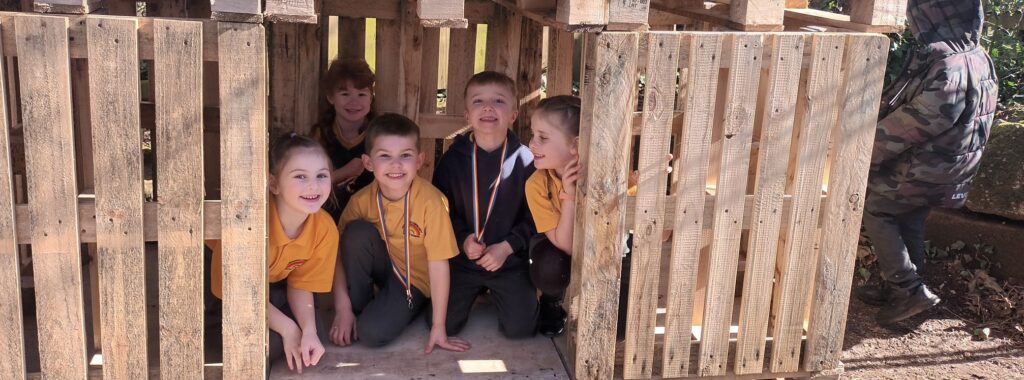
• Building small wooden hideaways for children.
• Purchasing and installing signage to promote strategies and provide positive messages.
• Donating plants, turf, or other resources to enhance the space.
Get in Touch: If you or your company can help in any way, please reach out to us at admin@exminsterschool.co.uk.
Together, we can ensure that every child has access to a safe and supportive space to nurture their mental wellbeing. Thank you for being part of this important journey!
Civic Award
Year 6 children have the opportunity to take part in the Torbay and Devon Civic Award. Mrs Nowell brought the Civic Award to Exminster in 2015 and it has grown each year. The award encourages the children to take part in citizenship, take up new hobbies and grow in confidence and independence. We work with the local community of Exminster to offer a variety of community citizenship opportunities for the children.
To achieve the award pupils have to prove their participation in the following areas:
- Active Citizenship in their school community . This could be as Digital leaders, Reading Buddies, School Learning Team or other positions of trust and responsibility in school.
- Active Citizenship in their home communities. In the past, pupils have taken part in beach cleans, bulb planting, helping at Brownies /Cubs/sports clubs and looking after people in the community. Pupils may also work with others to organise events in school to support local charities.
- A physical hobby(ies) and A non-physical hobby (ies) Children should spend about 30 minutes on average a week on their hobbies and one of them needs to be new to the child from the September of their Year 6.
- Residential experience and adventure training. This entails sleeping away from home and family and taking part in outdoor challenges.
- Children need to make a pledge to the planet during the time they are undertaking the award. Children will need to research ways to help save the environment and take action on at least one issue.
In June, the children present their portfolios of evidence and are interviewed by our assessors. They attend a presentation with other schools to receive their awards. To celebrate their achievements, Mrs Whalley invites the children to a breakfast to share their experiences.
If you would like further information, or feel you have a community opportunity you could offer to the school, please contact Mrs Nowell through the school office.
In Spring 2026, Mrs Nowell introduced this award to our Year 2 cohort for the very first time. The children and parents were introduced to the different areas and children spent half a term involved in different activities. At the end of this, they then had a celebration assembly that their families attended. It has been a great introduction to the award and the sense of citizenship in their local and wider community.
School Learning Team
School Learning Team
The School Learning Team consists of two elected representatives from each class from Year 1 through Year 6, who meet biweekly with the co-headteacher to discuss key aspects of school life and development. By gathering feedback and suggestions from their peers, representatives ensure every child’s voice helps shape our school environment. Participation encourages vital life skills, including active listening, public speaking, summarising feedback, and thoughtful decision-making. These are fundamental skills that underpin our oracy framework.
Understanding Democracy: Elections & Polling Stations
To help our pupils understand how government operates, the power of voting, and the core principles of democracy, our selection process mirrors a real-world democratic election.
Children interested in representing their class prepare short presentations to explain their vision and leadership qualities. On election day, the school sets up an authentic polling station experience. Pupils across Years 1 to 6 learn about secret ballots, casting their votes inside private voting booths before placing them into a secure ballot box. Votes are counted confidentially to announce the elected team. This practical experience teaches pupils why voting matters, how democratic processes ensure fairness, and how individual voices contribute to collective change.
Key Initiatives & Community Impact
Throughout their time on the team, representatives lead and support a wide range of meaningful initiatives across the school, local community, and wider world:
- Inclusion & Wellbeing: The team champions student wellbeing by establishing ‘trusted adult’ networks across the school so every child feels supported. To ensure our community is fully inclusive, representatives this year have also learnt and taught Signalong to classes to communicate with school members.
- Global & Local Outreach: The team leads an annual fundraiser for the Nayamba School, successfully raising enough support to feed the entire school for a full month. They coordinate the annual shoebox appeal sending gifts to children in Ukraine and Moldova, run a Reverse Christmas Tree event exchanging tags for food bank donations, and organise Comic Relief activities to raise awareness and funds for national causes.
- Careers, STEM, & Equality: The team explores future possibilities by learning about STEM careers, discussing job stereotypes, and exploring protected characteristics. Demonstrating mentorship, Year 6 representatives have written and illustrated an electronic book for Reception pupils focused on using personal strengths to explore future careers.
- Celebrating Diversity & Kindness: Representatives cultivate a caring culture through Random Acts of Kindness activities and host Mother Languages Day to celebrate the rich variety of languages and cultural connections within our school community.
- School Development & Creativity: The team links up with our whole school development plan so we are all understanding what we are working on and how we are doing this. They also foster pupil creativity by launching competitions and organising the Summer Fair poster design contest.
Leadership and Governance
To deepen their understanding of organisational leadership, representatives engage in discussions with school governors to learn how governing boards operate and how pupil feedback influences major school decisions.
“It is invaluable for children to understand the importance of democracy and having a voice in decisions that affect them,” says Mrs. Whalley, co-headteacher and coordinator of the team. “I always look forward to our meetings and am continuously inspired by their ideas, which provide valuable insight into how we can create a better school experience.”
Eco Team
Overview
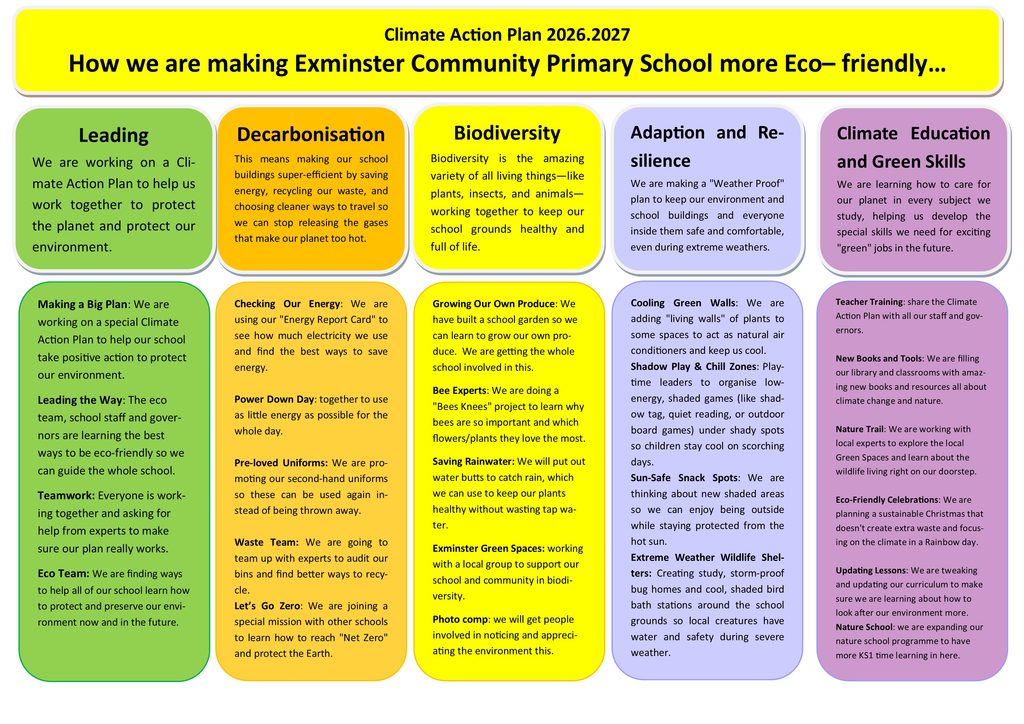
Our Eco Team is dedicated to promoting sustainability and encouraging everyone to make small changes for a positive environmental impact. By raising awareness about climate issues and fostering a love for nature, the team inspires all children to take action.
Over the years, we’ve earned several Eco awards for our school’s contributions to environmental conservation. Some of our key initiatives include:
- Ch-Angels Project: Classes receive a recycled angel in exchange for pledging a small change to help the planet. These pledges include actions like turning off lights, reducing paper towel usage, walking or scooting to school, minimizing food waste, and avoiding single-use plastics.
- Climate Club: Led by Dr. Chris Jones from the Met Office, the Climate Club educates Year 5 and Year 6 students on the causes and consequences of climate change. Through engaging activities, including researching the climates of various countries and creating fun “Top Trumps” cards, students learn about the impact of climate change on a global scale.
- Promoting Random Acts of Wildness to encourage students to engage with nature, such as feeling the ground beneath their feet.
- Tackling littering issues, completing a litter audit and proposing practical solutions.
- Educating students on carbon footprints and the small actions we can take to reduce them.
- Celebrating a green Christmas, by using recycled materials for decorations, finding alternatives to wrapping paper, and reducing waste.
- Supporting biodiversity through the “Bees Knees” project, which raises awareness of the importance of bees and how to attract them to our gardens.
Through these activities, we aim to make a lasting impact on our children, helping them develop the knowledge and skills they need to care for our planet now and in the future.
These programs reflect our commitment to creating an inclusive, responsible, and compassionate community. Our goal is to empower children to take pride in their contributions, make informed decisions, and become active, caring citizens of the world.
Climate Stripes

What are Warming Stripes, or Climate Stripes?
Warming stripes are a great and easy way to easily visualise the world’s rising temperature and how our climate has changed.
They simply denote the average temperature of each year by a different colour, with blue colours showing cooler years and red colours warmer years. As our climate has changed over the last century, we see clearly how the stripes change from more blues to more reds, although individual years can still fluctuate up or down.
Here we are able to produce the warming stripes specifically for Exminster. They show how our climate has changed from 1884 up to 2021.
Why paint them on the school?
Education and awareness of environmental issues are vital to help prepare for a sustainable tomorrow. At Exminster Community Primary School we take great pride in our pupils’ interest and knowledge about the environment and the health of our planet. Concern for the community and the whole world aligns with our Rainbow Values.
By showing the warming stripes for Exminster we hope this serves as a reminder of the importance of environmental awareness and that climate change is with us here and now. They also show a solidarity with other places around the world where climate is changing and having a range of impacts.
Global and local climate
The whole world has warmed, but each location has its own individual history. National and local weather differences mean there is different detail, but the same big picture. Like a fingerprint these are unique for every location.
Why not visit https://showyourstripes.info/s/globe and see stripes for other countries. Do you have friends or family who live abroad? Or have you visited or lived abroad? You can see that each country has different data for their warming stripes, but no country can escape the “global” nature of global warming.
Where else can we see them?
Warming Stripes were the brainchild of Professor Ed Hawkins at the University of Reading. They have really taken off and are now commonly seen in many places to show awareness of climate change and support for environmental issues. Ed was excited to hear of our stripes and said, “I hope that these warming stripes for Exminster will start vital conversations about our changing climate and about the choices that we can all take to reduce carbon emissions.”
For example,
- Reading FC have warming stripes on their 2022 football kit: https://www.readingfc.co.uk/news/2022/june/21/show-your-stripes-and-share-our-hoops-for-the-future/
- Buses: https://www.reading-buses.co.uk/show-your-stripes
- Festivals: https://sites.reading.ac.uk/connected/2019/08/27/climate-stripes-at-reading-festival/
These are just some examples. To our knowledge Exminster is one of the first schools to proudly display their own Warming Stripes.
Data acknowledgement
The data for our warming stripes are obtained from the Met Office’s HadUK-Grid dataset of historical climate records for the UK (https://www.metoffice.gov.uk/research/climate/maps-and-data/data/index). We gratefully acknowledge help from Dan Hollis at the Met Office for helping process this data for us